


Why Compact Gear Is Changing the Way We Train
The future of fitness is not bigger. It is smarter, cleaner, and built for real life.
The biggest shift in fitness design didn't happen in a lab. It happened in a spare bedroom, a studio apartment, a hotel room. Anywhere that wasn't a gym. It happened when people looked at the space they had and asked: what actually fits here?
For decades, fitness equipment design moved in one direction: bigger. More weight. More attachments. More surface area. The logic was simple: more capability required more machine. And it was true, right up until the moment people stopped needing the machine to be in one place.
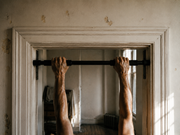
The problem with big gear isn't capability. It's commitment. A cable tower needs a room. A power rack needs a floor that can hold it. A treadmill needs a wall plug and a postcode it never leaves. When your life moves, none of this comes with you. And when fitness can't follow you, it stops happening.
"The constraint of small space didn't limit what was possible. It clarified what was necessary."
Compact is not a compromise. This is the misunderstanding that held fitness design back for years. The assumption was that smaller meant weaker, with fewer resistance levels, less stability, less of everything that made training effective. That was true when the only way to increase load was to add mass.
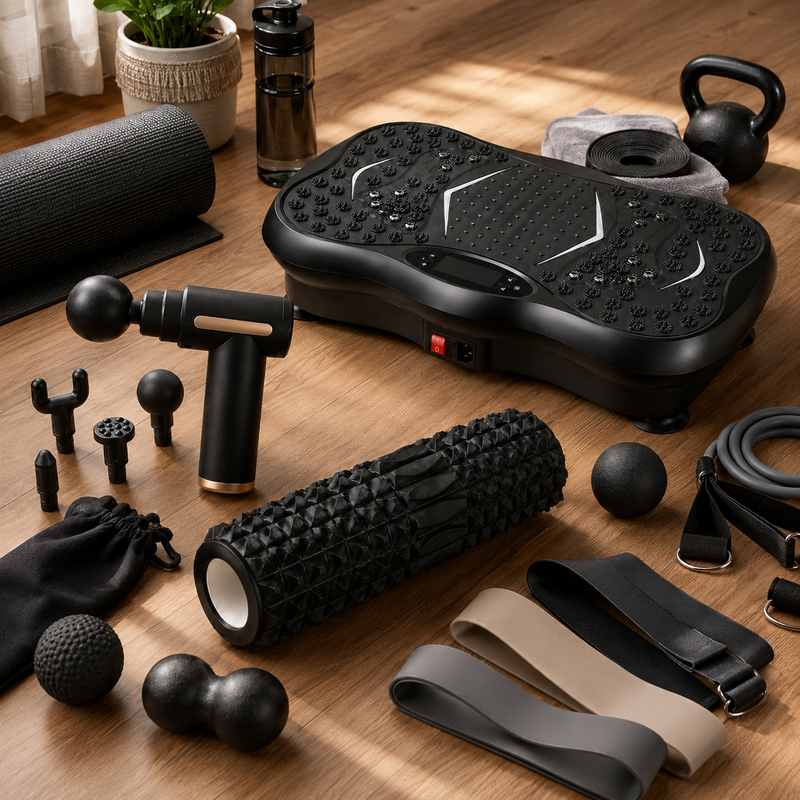
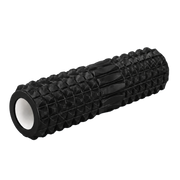
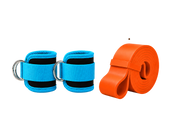
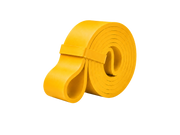
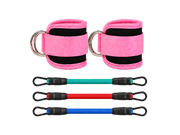
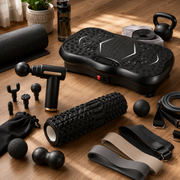
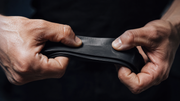
What changed the equation was materials science and mechanical intelligence. A resistance band isn't just a smaller barbell. It's a fundamentally different load curve, one that actually increases resistance through the range of motion where the muscle is strongest. A foam roller with the right density does more than a massage chair that costs twenty times as much. Compact gear isn't trying to be big gear in a smaller box. It's a different category with its own logic.
The design problem nobody solvedThe fitness industry understood the demand for compact gear. What it failed to solve was quality. The market split into two camps: inexpensive gear that broke quickly and expensive gear that stayed home. Neither served the person who trained seriously and moved often.
The design challenge isn't making gear small. It's making gear small without making it worse. That requires a different kind of material selection. Textiles that hold tension without degrading. Foam that doesn't compress and stay down. Handles that don't slip when wet. These aren't glamorous engineering problems, but they're the ones that determine whether the gear gets used or gets thrown away.
"Small gear made well is harder to make than big gear made simply. That's the part most brands skip."
The direction fitness is moving is unmistakable. Gyms aren't disappearing, but they're no longer the only serious option. The person training in a hotel room at 6am is no longer making do. They're using gear designed for exactly that context, and they're getting results that prove the space was never the limiting factor.
The future of fitness is not a smaller version of what came before. It's a smarter one, designed around how people actually live, move, and train. Compact isn't the future of fitness because big failed. It's the future because it works better for the lives people have.
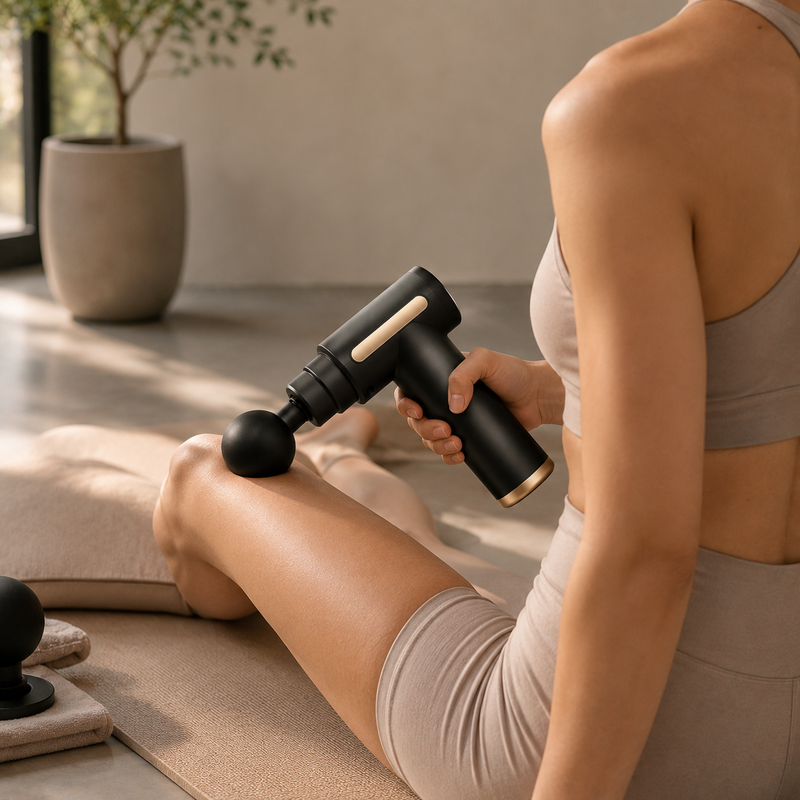
Portability changes consistencyPortability is not just a storage feature. It changes behaviour. When equipment can move with you, training no longer depends on one location staying available. That matters because most routines fail during disruption: travel, exams, late work, bad weather, closed gyms, crowded spaces, or days where the schedule breaks.
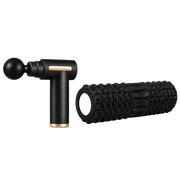
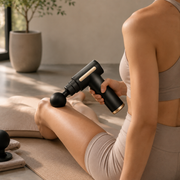
Compact gear gives the routine a second route. If the full session is impossible, a smaller version can still happen. If the gym is too far, resistance work can still happen. If the body feels stiff, recovery can still happen. The tool doesn't need to do everything. It needs to stop the routine from dropping to zero.
This is the practical reason compact gear is growing. It lowers the number of conditions required for action. The fewer conditions a routine needs, the more durable it becomes.
Why aesthetics still matterPeople often pretend design is separate from performance. It isn't. A product that looks clean, stores neatly, and feels good to use is more likely to remain visible and accessible. A product that looks cheap or messy gets hidden away. Once it's hidden, it gets used less.
That doesn't mean fitness gear should be designed like decoration. It means good design respects the spaces people actually live in. A compact tool may sit beside a sofa, under a desk, in a bedroom corner, or in a bag. If it feels out of place everywhere, it slowly disappears from the routine.
The best compact equipment earns its place physically and visually. It performs well enough to be trusted and looks clean enough to stay within reach. That combination is what makes it useful day after day.