


Percussion Therapy 101
How massage guns support muscle relief, circulation, and better recovery habits.
Percussion therapy is the reason massage guns feel different from normal massage. Instead of slow pressure, a massage gun delivers quick, repeated pulses into soft tissue. That rhythm is what makes the tool useful for tight muscles, warm-ups, and post-workout recovery.
The idea is simple: repeated mechanical pressure can help an area feel looser, more awake, and easier to move. It doesn't magically repair muscle in seconds, and it shouldn't be used to push through injury. But when used properly, it can become one of the easiest recovery habits to keep.
"A massage gun isn't a shortcut around recovery. It's a tool that makes recovery easier to start."
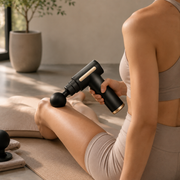
A massage gun uses a motor to move the attachment head in rapid pulses. These pulses apply pressure to the surface of the muscle and surrounding soft tissue. For many people, that sensation helps reduce the feeling of tightness and makes movement feel smoother.
The benefit is partly physical and partly neurological. The pressure can increase local awareness of the area, encourage blood flow, and help the nervous system stop guarding a tight muscle as aggressively. That's why a short session can make a stiff calf, quad, shoulder, or upper back feel easier to move.
When to use itBefore training, use a massage gun briefly. The goal is to wake up the area, not relax it completely. After training, use it more slowly on areas that feel tight or overworked. On rest days, use it as part of a short recovery routine with light movement or stretching.
- Use 20 to 40 seconds per area before training
- Use 60 to 90 seconds per area after training or on rest days
- Keep the pressure comfortable, not painful
- Avoid joints, bones, bruises, and sharp pain
- Move slowly instead of forcing the gun into one spot

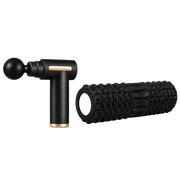
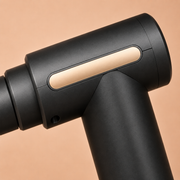
PulseX Massage Gun
Target major muscle groups with simple percussion therapy before training, after training, or during recovery days.
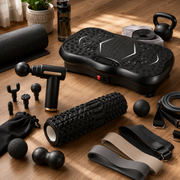
Most massage guns include several heads because different areas need different contact points. A round head works well for larger muscles like quads, glutes, and calves. A flat head is good for general use. A bullet head should be used carefully on smaller trigger-point areas. A fork head is usually used around longer muscles, avoiding direct pressure on the spine or bones.
"The best setting is the one that helps the muscle relax without making the body tense against it."
Start lower than you think. More speed and more pressure aren't always better. The goal is a useful signal, not a contest. If the muscle relaxes and movement feels easier afterward, the session did its job.
Where to use it firstStart with large muscle groups that tolerate pressure well: calves, quads, hamstrings, glutes, upper back, and shoulders. These areas commonly feel tight after training or long periods of sitting. They also give clear feedback. If the pressure feels comfortable and movement feels easier afterward, the tool is being used well.
Avoid treating joints, bones, the front of the neck, bruised areas, numb areas, or sharp pain. A massage gun is designed for soft tissue, not for forcing pressure into sensitive structures. If an area feels wrong, stop. Better recovery should make the body feel safer, not more threatened.
Start with broad areas before using smaller attachments. Most people don't need aggressive pinpoint pressure. They need consistent, comfortable work on the muscles carrying the most tension.
Pre-workout vs. post-workout useBefore training, use percussion therapy as activation. Keep it brief and lighter. The goal is to increase awareness and movement readiness without making the area feel sleepy. Twenty to forty seconds on a major muscle group is usually enough.
After training, the goal changes. Move slower. Use a comfortable speed. Spend more time on the muscles that worked hardest. This is where one to two minutes per area can fit well, especially after leg training, running, or upper-body sessions that leave shoulders and back tight.
The same tool can serve different purposes depending on timing. Before training, wake the body up. After training, help it downshift.
Speed up your recovery →
Target sore muscles in minutes with the PulseX. Built for rest days, post-workout relief, and daily recovery.
Shop PulseX →