




Recovery Is Training: Why Rest Days Still Count
Progress does not only happen during the workout. It happens when the body resets.
The workout is the stimulus. The rest is where the adaptation happens. This isn't a motivational reframe. It's the literal biology of how training works. And yet recovery remains the part of fitness that most people treat as optional.
The culture around training has always celebrated the session. The reps, the miles, the minutes under tension. These are the visible things, the things you can log, share, and feel immediately. Recovery is invisible. It happens when you're asleep. It happens in the hours between sessions when nothing appears to be occurring. Its effects, reduced soreness, better output next time, sustained performance over months and years, are deferred, cumulative, and easy to attribute to other things.
This is why rest days get skipped. Not because people don't know they matter, but because doing nothing feels like falling behind. It takes a particular kind of discipline to rest when you want to train. A different kind of trust that the pause is part of the process.
"Progress doesn't only happen during the workout. It happens when the body is allowed to catch up."
Training creates micro-damage in muscle tissue. That's not a failure. It's the mechanism. The damage signals the body to repair and reinforce, and the reinforcement is what we call adaptation: muscle growth, increased endurance, better movement economy. But this process requires resources, time, and the absence of new disruption.
When training is stacked without adequate recovery, the repair cycle gets interrupted. The body remains in a state of damage without completing adaptation. Performance plateaus. Soreness becomes chronic. Injury risk rises. What started as commitment becomes the thing that limits progress.
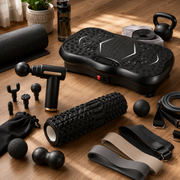
Active recovery vs. passive restRest doesn't always mean stillness. Active recovery, light movement, stretching, foam rolling, walking, keeps blood circulating through recovering tissue without adding new stress. It accelerates the clearance of metabolic waste and maintains range of motion during the window when muscles are adapting.
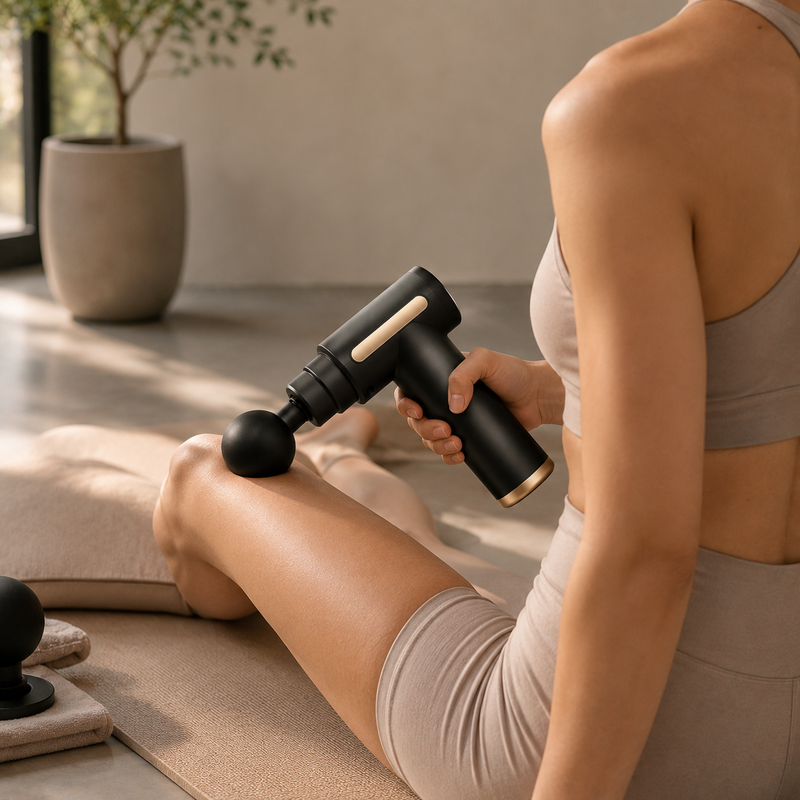
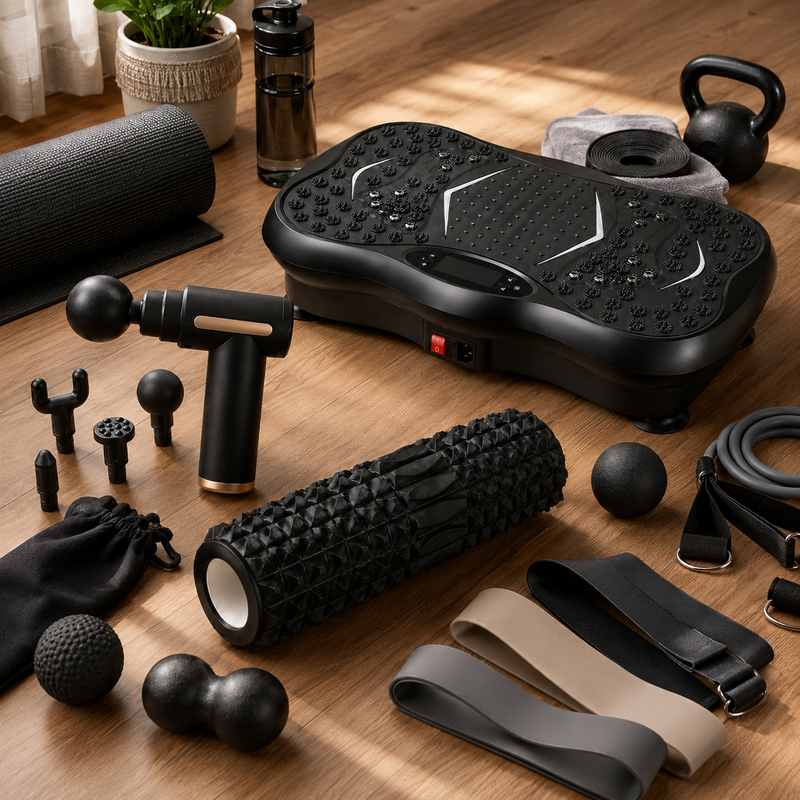
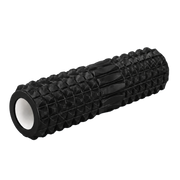
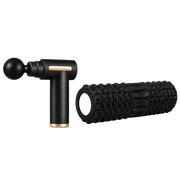
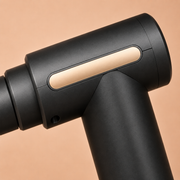
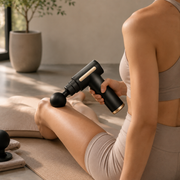
A foam roller on a rest day isn't procrastination. It's training, just a different kind. The same intention that drives a session at full effort should drive a recovery session at low effort. Both are part of the same process. Neither is wasted time. A percussion massager like the PulseX takes this further, targeting deeper tissue in minutes without the effort of a full session.

PulseX Massage Gun
Percussion therapy for deeper tissue relief after training, travel, or long days on your feet.
"The discipline to rest is harder than the discipline to train. It's also more important."
Sleep is the most important recovery tool available, and also the most underused. Seven to nine hours creates the hormonal environment where adaptation occurs at its fastest rate. No supplement, no protocol, and no piece of equipment accelerates recovery as effectively as consistent, sufficient sleep.
After sleep: hydration, nutrition with adequate protein, and some form of light movement. A ten-minute mobility flow. A walk. A slow stretch with a foam roller. These aren't consolation prizes for not training. They're part of the same system as the training itself. For deeper, more targeted work, the PulseX fits the same role: a simple tool for releasing tension without turning recovery into another full workout.
The athlete who gets this right, who treats recovery with the same intention as training, is the one still going in five years. Not the one who trained hardest, but the one who trained most sustainably. That's what rest days are for. Not to pause progress. To make it possible.
Why more is not always moreTraining creates stress. The body adapts only when that stress is followed by enough recovery. If stress keeps rising while recovery stays low, performance eventually stops improving. The person may still feel busy, disciplined, and committed, but the body isn't receiving a useful signal anymore. It's receiving noise.
This is why adding more work isn't always the answer to slow progress. Sometimes the missing piece isn't another set. It's better sleep, a lighter day, improved nutrition, more hydration, or a recovery session that reduces tightness before it changes movement quality.
A rest day isn't weakness. It's part of managing the total stress load. The athlete who understands this can train harder on the days that matter because they aren't carrying unnecessary fatigue into every session.
Recovery as a performance toolRecovery is often presented as comfort, but its real value is performance. A recovered body produces better force, moves through better ranges, reacts faster, and tolerates training with less compensation. This matters especially for home athletes, runners, lifters, and anyone training around a busy schedule.
Tools like foam rollers and massage guns are useful because they make recovery more specific. Instead of vaguely "resting," a person can address tight calves after running, stiff quads after squats, or upper-back tension after long hours at a desk. That specificity makes recovery feel active without turning it into another exhausting session.
The goal is simple: arrive at the next workout capable of doing quality work. Rest days count because they protect that quality.
Speed up your recovery →
Target sore muscles in minutes with the PulseX. Built for rest days, post-workout relief, and daily recovery.
Shop PulseX →