














No Gym Required: The Rise of Everyday Training
How modern fitness is moving beyond gym walls and into homes, hotels, and daily routines.
The gym was always a solution to a problem that didn't need to exist. The problem wasn't that people lacked equipment. It was that someone convinced them they did, and then built a building to rent them the answer.
For a long time it worked. The gym made sense when home space was scarce, when the only way to add resistance was to add iron, when the social ritual of going somewhere to train was part of the appeal. None of that has entirely disappeared. But the grip the gym had on fitness, the idea that serious training happened there and only there, is loosening.
What replaced it isn't laziness. It's clarity. People who train consistently have always known that showing up matters more than where you show up. The gym gave them a place. Everyday training gives them permission to be anywhere.
"The people who train consistently aren't the ones with the best gyms. They're the ones who stopped needing one."
Everyday training isn't a category. It's a set of people who found a way. The nurse who works night shifts and trains at 2pm in her living room between sleep and the school run. The sales manager who spends twelve days a month in hotels and hasn't missed a session in two years. The father who gets up at 5:30 because it's the only time that's his.
These people don't appear in fitness marketing. They don't have photogenic home gyms. Their training spaces are a cleared patch of floor or a hotel balcony with enough room to roll out a mat. What they have in common is a decision, made again every day, that movement matters regardless of circumstance.
What the data won't tell youThe rise of home fitness is well-documented. The numbers are real. But the statistic that matters most is one that never gets measured: the number of workouts that happened because the barriers were removed. Not because someone felt motivated. Not because the conditions were ideal. Because the mat was already on the floor and the band was already in the bag and there was no commute to talk yourself out of.
Friction is the enemy of consistency. Every layer between you and the session, the drive, the parking, the locker room, the waiting for equipment, is a place where the decision can reverse itself. Everyday training strips those layers away. Not to make it easier. To make it harder to stop.
"Fitness moved out of the gym the moment people realised the gym was optional."
The gym isn't dead. For many people it remains the best option, the most motivating environment, the place where training feels most real. But it's no longer the only legitimate one. The rise of everyday training isn't a rejection of the gym. It's an expansion of what counts. And for the people who've been training in hallways and hotel rooms for years, that expansion is long overdue.
Train where you are. That's always been enough.
The new definition of seriousSerious training used to be judged by the setting. If it happened in a gym, it counted. If it happened at home, it was treated as maintenance. That distinction is outdated. Serious training is not defined by the building. It's defined by intent, progression, and consistency.
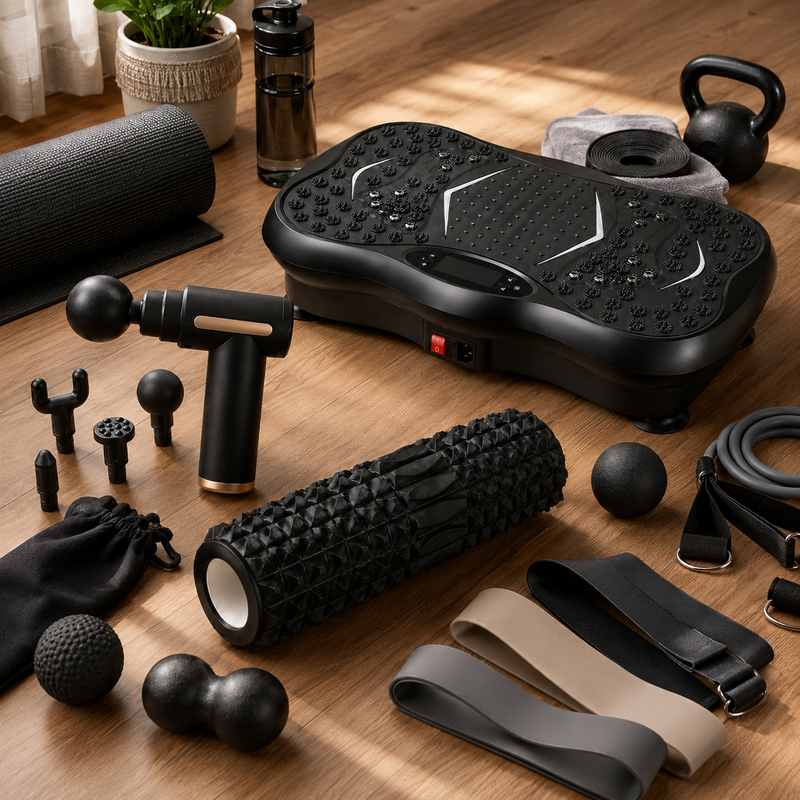
A casual gym session can be less effective than a focused home session. A full room of machines doesn't matter if the work is distracted. A simple band, board, roller, and recovery tool can be enough when the person using them applies effort with structure. The environment can help, but it doesn't do the work.
This shift matters because it gives people permission to stop waiting. They don't need to become "gym people" before they become active people. They can begin with the space and tools available right now.
How everyday training fits a weekA realistic week doesn't need seven intense sessions. It might include two focused strength workouts, one short conditioning session, two light mobility or recovery days, and a few walks. That kind of structure isn't flashy, but it's sustainable. It also covers the qualities most people actually need: strength, movement, circulation, and recovery.
Everyday training becomes easier when the week has levels. Some days are hard. Some are light. Some are only about keeping the body moving. This prevents the all-or-nothing mindset that ruins consistency. A low-energy day doesn't have to become a missed day. It can become a recovery day.
The point isn't to lower effort. The point is to match effort to the day while keeping the routine alive.