The Workout That Happens Anywhere
A story about training without waiting for the perfect place, perfect time, or perfect setup.
It was 5:47am when the alarm went off. The hotel room was dark. The gym, three floors below, wouldn't open until seven. There was a flight to catch at nine. And still, something in the body said: move.
This is the reality that most fitness advice ignores. The perfect workout doesn't happen in a perfectly lit studio with the right gear and 90 minutes to spare. The workout that matters is the one that happens on the floor of a Penang hotel room, in the narrow aisle of an apartment bedroom, in the ten minutes you carved out before the day swallowed you whole.
The fitness industry has spent decades selling the fantasy of the perfect setup. The full rack. The premium flooring. The dedicated space. And there's nothing wrong with any of that, if you have it. But most people don't. Most people have a floor, a body, and the decision to show up anyway.
"The best workout is the one that actually happens, not the one you planned when the conditions were perfect."
Something changed in how people think about training. It didn't happen overnight. It happened gradually, across millions of small decisions: people choosing to train in living rooms, on rooftops, in car parks, at the edge of a hotel pool. They stopped waiting for the gym and started working with what was in front of them.
What they discovered was that the body doesn't care about the address. A resistance band loaded correctly challenges muscle the same way a cable machine does. A bodyweight squat with full intention beats a weighted squat done distracted. The constraint wasn't the enemy of the workout. It was what made it work.
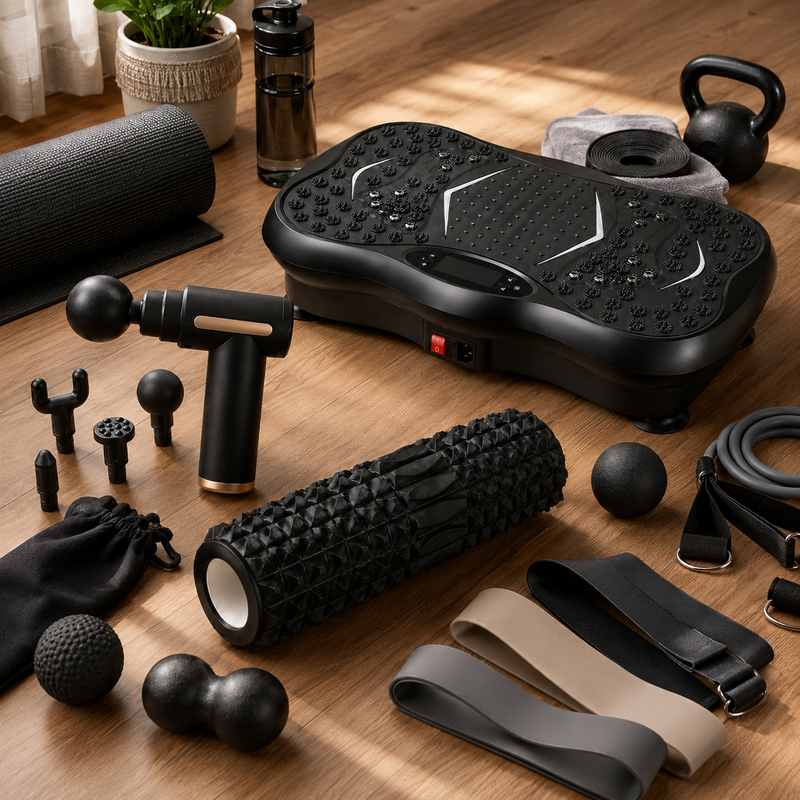
What it takesTraining anywhere isn't just a mindset. It requires gear that earns the word portable: things that pack small, set up fast, and perform under conditions that aren't ideal. A mat that doesn't curl at the corners on a concrete floor. Bands that don't snap mid-rep. A roller that fits in a carry-on.
Most people who've tried to build a travel training kit have gone through the cycle. Buy cheap gear, replace it. Buy premium gear, resent the price. Settle for something in the middle that still isn't quite right. The gap between "cheap and useless" and "expensive and excessive" shouldn't be this wide.
The workout that happens anywhere starts with tools that go anywhere. Not complicated. Not heavy. Not stored in a garage you never enter. Just the right things, always within reach.
"Constraint isn't the enemy of the workout. It's what makes it work."
The shift toward everyday training isn't a trend. It's a correction. Fitness was always meant to be woven into life, not separated from it. The people who train consistently aren't the ones with the best gyms. They're the ones who made training non-negotiable, regardless of where they happen to be.
The next workout? It happens wherever you are. Not later. Not when you're ready. Now.
The minimum effective sessionThe mistake people make with flexible training is assuming it has to be improvised. It doesn't. A workout that happens anywhere still needs a structure. The difference is that the structure has to survive different rooms, different floors, different energy levels, and different time limits.
The simplest version is a three-part session: one push, one pull, one lower-body pattern. Push-ups, band rows, and split squats can cover most of the body without needing a machine. Add a core movement at the end and the session becomes complete enough to matter. It won't replace every type of gym training, but it protects strength, movement quality, and routine continuity.
The key is not to make the session complicated. The key is to make it repeatable. If you need twenty minutes to design the workout before starting, it's too fragile. If you can begin within sixty seconds, it's built for real life.
How to progress without a gymProgression doesn't require heavier plates every week. It requires the body to face a slightly harder demand over time. With compact training, that can mean using a stronger band, slowing the lowering phase of a movement, adding a pause, increasing total reps, reducing rest, or choosing a harder angle.
A push-up with a three-second descent is a different exercise from a rushed push-up. A band row held for one second at full contraction teaches control that careless machine reps often miss. A split squat performed slowly can challenge balance, mobility, and strength at the same time. These aren't tricks. They're ways to create mechanical tension when load is limited.
That's why the anywhere workout shouldn't be seen as a backup plan. It's a different kind of plan. It rewards control, consistency, and the willingness to use simple tools seriously.